Dr Michelle Ryan's research focuses on gender discrimination and she has a particular interest in the psychology surrounding the appointment of women to leadership positions.
Dr Darren Croft's primary research interest lies in understanding the structure, function and implications (ecological and evolutionary) of social interactions in animals.

Our research

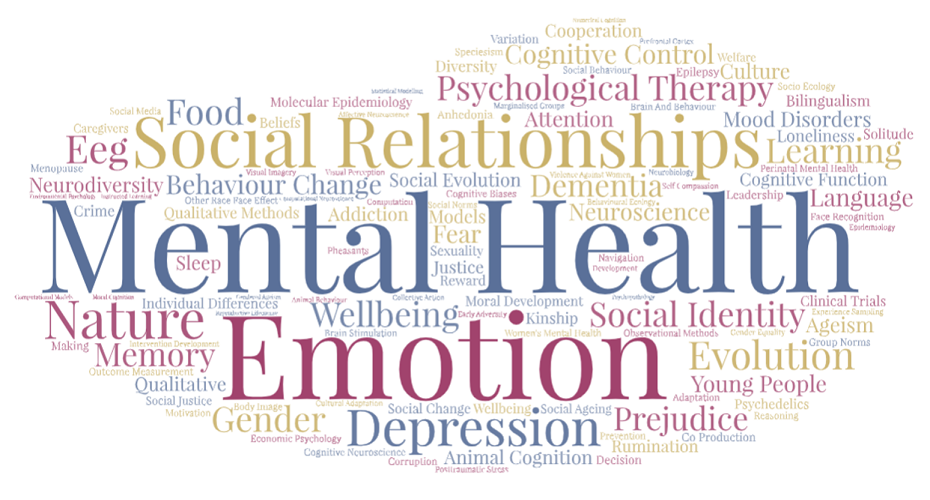
The most recent Research Assessment Exercise (RAE 2008) confirms the status of Psychology at the University of Exeter as one of the foremost centres of research in the country. We are ranked 11th in the UK for our world leading research2, and have active programmes of research in a variety of human and animal behaviour, specialising in visual perception, social psychology, organisational psychology, economic and consumer psychology, environmental psychology, psychopathology, human cognition, cognitive neuroscience and neuropsychology.

Our reputation for high quality research has helped us recruit staff with excellent records, who have been engaged in international collaborative research. This has ensured we have an exceptional breadth and depth of expertise across all psychological disciplines.

Our leading academics are at the forefront of their chosen fields and are responsible for delivering the very latest knowledge and expertise to help shape social and economic policy, enhance business practice or improve the health and well-being of the population. From playing a central role in creating new professional guidelines for treating depression, to working with large organisations such as the Ministry of Defence and National Health Service, our globally-renowned academics ensure the impact of our research is far reaching.

Each year we attract around £1.3 million in external research funding from UK Research Councils and charities. In addition, our research is supported by links with government organisations (including the MET office, NHS, and the armed forces) and the commercial sector (including IBM, Microsoft, Chartered Institute of Personnel and Development).

Our research groups

Our research is organised around four coherent and highly productive research groups, which are at the cutting edge of research in Animal Behaviour, Cognitive Psychology and Neuroscience, Clinical Psychology and Mood Disorders, and Social, Environmental and Organisational Psychology. Each group provides not only breadth, but depth of the very latest, insightful knowledge at the very foundations of Psychology.

More details can be found below:

Centre for Research in Animal Behaviour

The Centre for Research in Animal Behaviour is distinctively placed as one of the few international groups with research strengths in behavioural ecology, sensory ecology, animal cognition and signalling and communication. Our research addresses the fundamental questions of how and what information is gathered from the physical and social environment, and how is this information used to make decisions in order to maximise survival and reproduction.

Clinical research group

The Clinical research group delivers world-class research into the advancement of theoretical knowledge and clinical practice. Our primary research area is in mood disorders, which are psychological processes implicated in unipolar and bipolar disorder and evidence-based approaches. The core structure within the group is the Mood Disorders Centre, a partnership between the University of Exeter and the National Health Service (NHS). The Centre has directly led to innovations in treatment that address key priorities in treating mood disorders and improving the health and quality-of-life of patients.

Cognition research group

The current research of members of the Cognition research group focuses largely on associative learning and its role in cognition, categorisation and memory, control of cognitive processes and implications for disorders of behaviour regulation, epidemiology, diagnosis and rehabilitation of traumatic brain injury; there is also research on language processing and cognitive development. We use a wide range of behavioural and neuroscience methodologies. Members of the group participate in a Centre for Cognitive Control and Associative Learning (CCAL).

Social, Environmental and Organisational research group

The Social, Environmental and Organisational research group has established an international reputation for their work in social identity theory, organisational psychology, group behaviour, environmental psychology and social cognition. This research group also contains the centre for research on Identity and the Psychology of Self in Society (IPSIS).

Research degrees and facilities

An MPhil/PhD offers an exciting opportunity to work with internationally leading researchers at the cutting-edge of research, within a close-knit and supportive environment. Find out more about our research programmes and facilities.

Our research seminars

There is a strong research culture in the Psychology at the University of Exeter, which is reflected in our regular seminars and workshops and visits from internationally renowned scholars. These are run over the course of the academic year, cover a wide range of topics and provide students and academics from across the University with a platform to meet and discuss the latest topics in psychology.

3 Research Assessment Exercise 2008 based on percentage of research categorised as 4* (world leading)